

Lake Thun Blog
That was the Chästeilet 2025 in the Justistal (including a photo gallery)
Published on
September 24, 2025
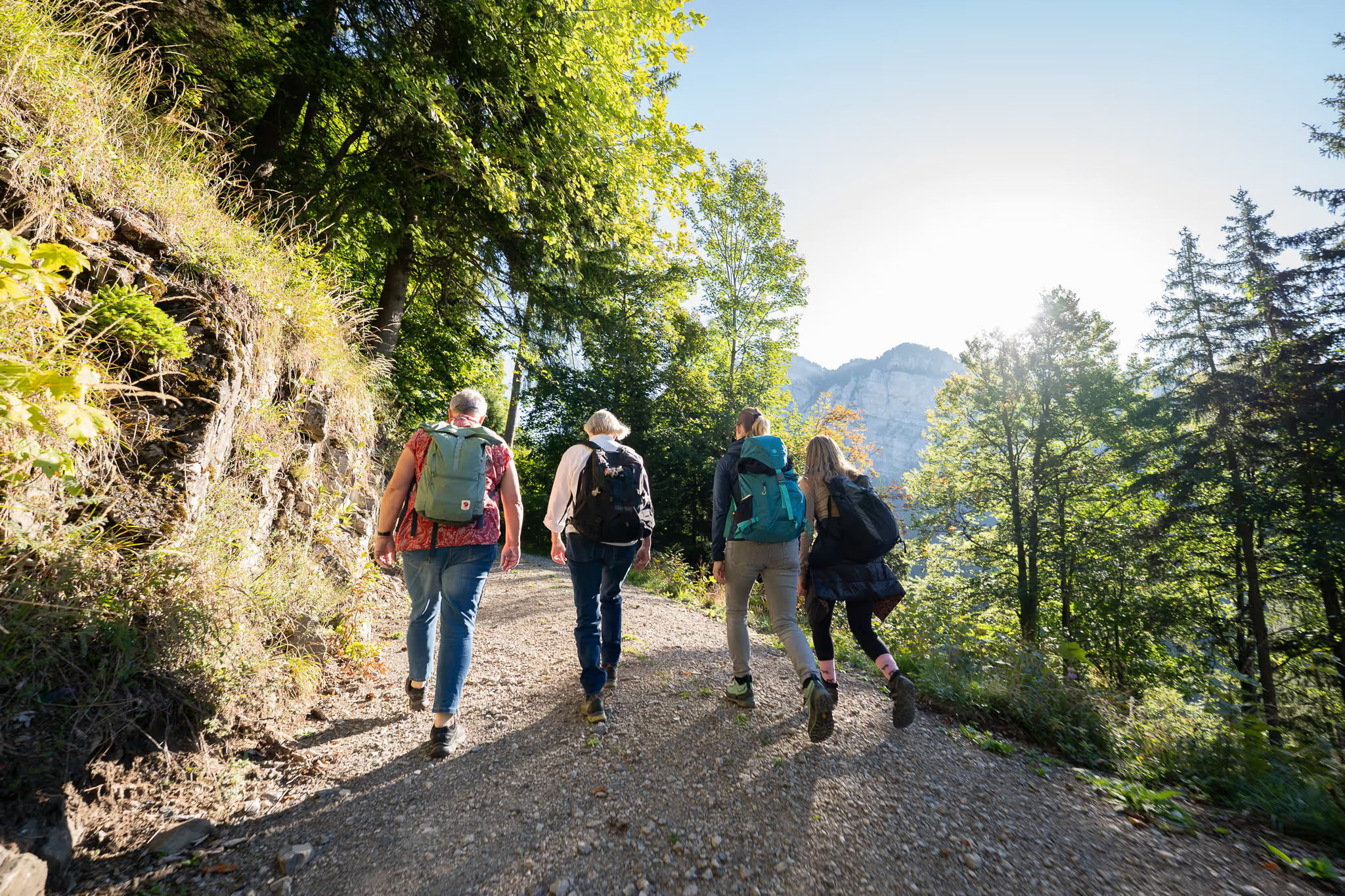
Arrival in the Justi Valley: Morning Anticipation
A golden September morning greets us in the Justistal, a remote alpine valley above Lake Thun that has been the setting for a very special tradition for nearly 300 years. Early in the morning, locals and visitors flock to the valley to witness theChästeilet 2025. The traditional Chäseteilet, during which the cheese produced over the alpine summer is divided fairly among the farmers based on the cows’ milk yield. Nine alpine pastures (alpine cooperatives) are involved here. Right at the entrance to the valley, near the Grön alp—the first one you come to—there’s already a festive atmosphere in the air: there, the alpine cheese is divided upright on the spot, and in fact, you can already hear cheerful yodeling coming from the alpine hut as early as 9 a.m.
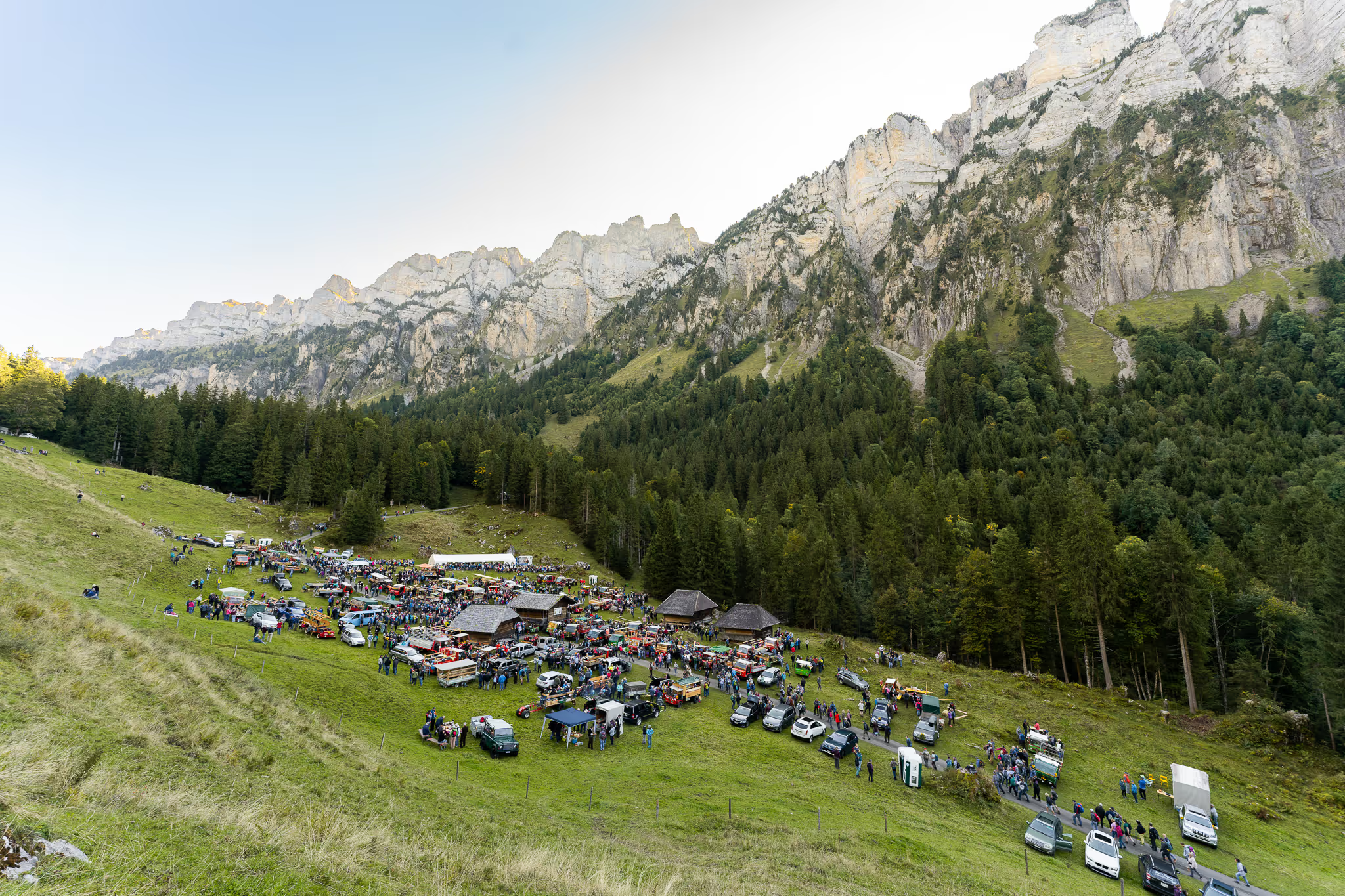
Our destination isSpycherbergplatz, located just below the Spycherberg Alp. Here, in a picturesque alpine meadow, stand four old wooden cheese storage sheds. Seven of the nine alpine cooperatives share their cheese in these sheds; two alps—the aforementioned Grön and the Spycherberg Alpine Cooperativeitself—carry out the sharing process at their own huts. Upon arriving at Spycherbergplatz, we are immediately greeted by the sounds of the alphorn. There’s a lively bustle around the storage sheds: Alpine herders in traditional attire (Chüjermutz) greet friends and family, curious visitors marvel at the surroundings, and the air is filled with the aroma of tangy cheese. A smallfestival food standisopen, offering local specialties. From crispy braided bread with sliced cheese to warming herbal tea, everything is provided to ensure everyone’s comfort. Many cow owners (the so-called“Bergrechtler”) have also brought their own picnics for their helpers and guests. The atmosphere is relaxed and full of anticipation; people are laughing, chatting, and here and there even making music spontaneously: Time and again, alpine herders join visitors in singing a yodel song, and the characteristic sounds of the Schwyzerörgeli (Handörgeli) can also be heard. This spontaneous interplay of music, nature, and people lends the event a unique atmosphere that feels both authentic and festive.
Traditional Ritual: Cheese Cut into Nine Pieces
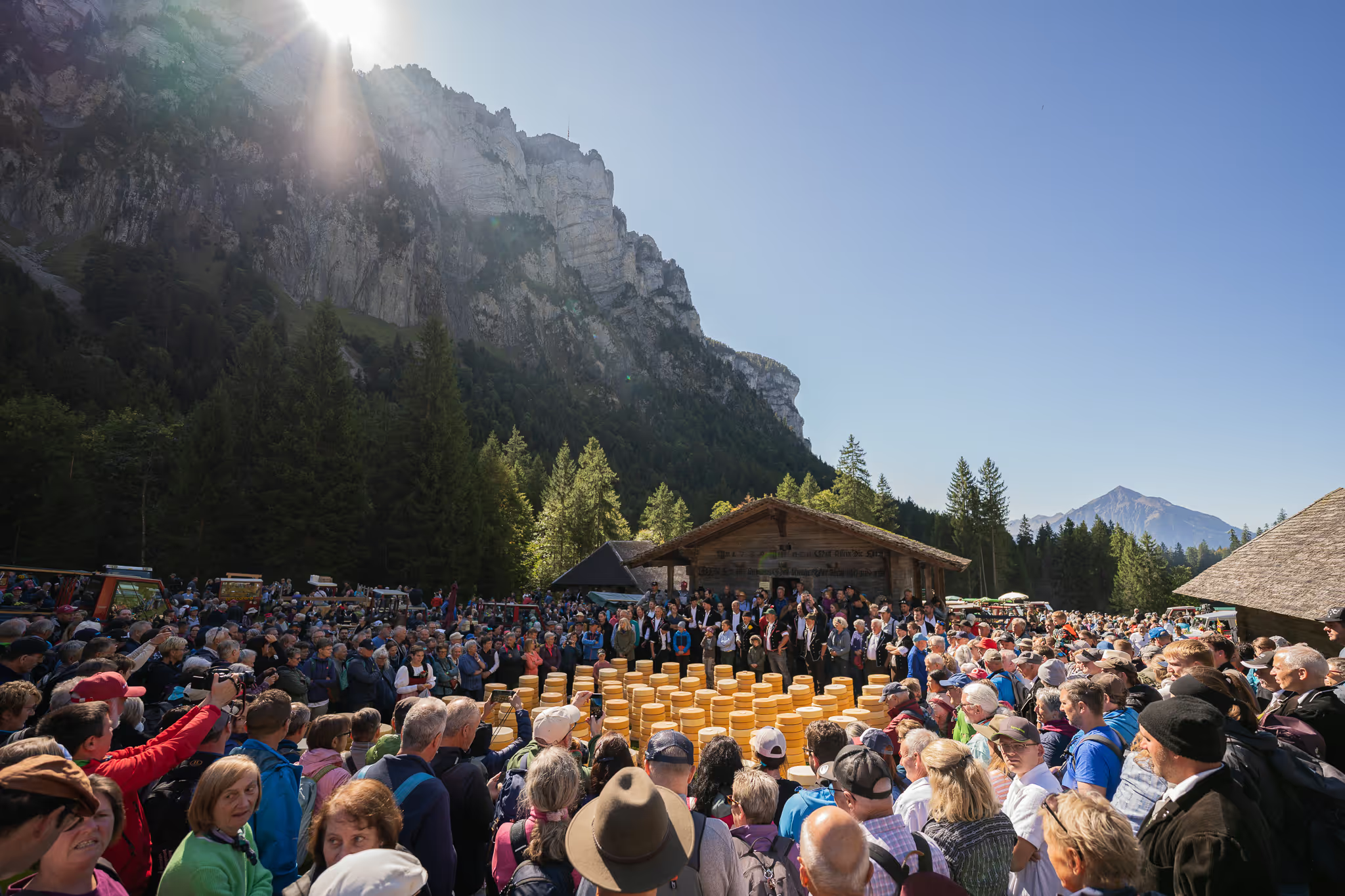
At 10:30 a.m., the valley is still in the shadow of the Niederhorn. The sun is slow to appear, but that doesn’t dampen the festive mood. The square is already filling up with eager faces. On thissunny September day, estimates suggest that up to 5,000 people have gathered in the Justistal. Locals, curious onlookers, and visitors from all over the world
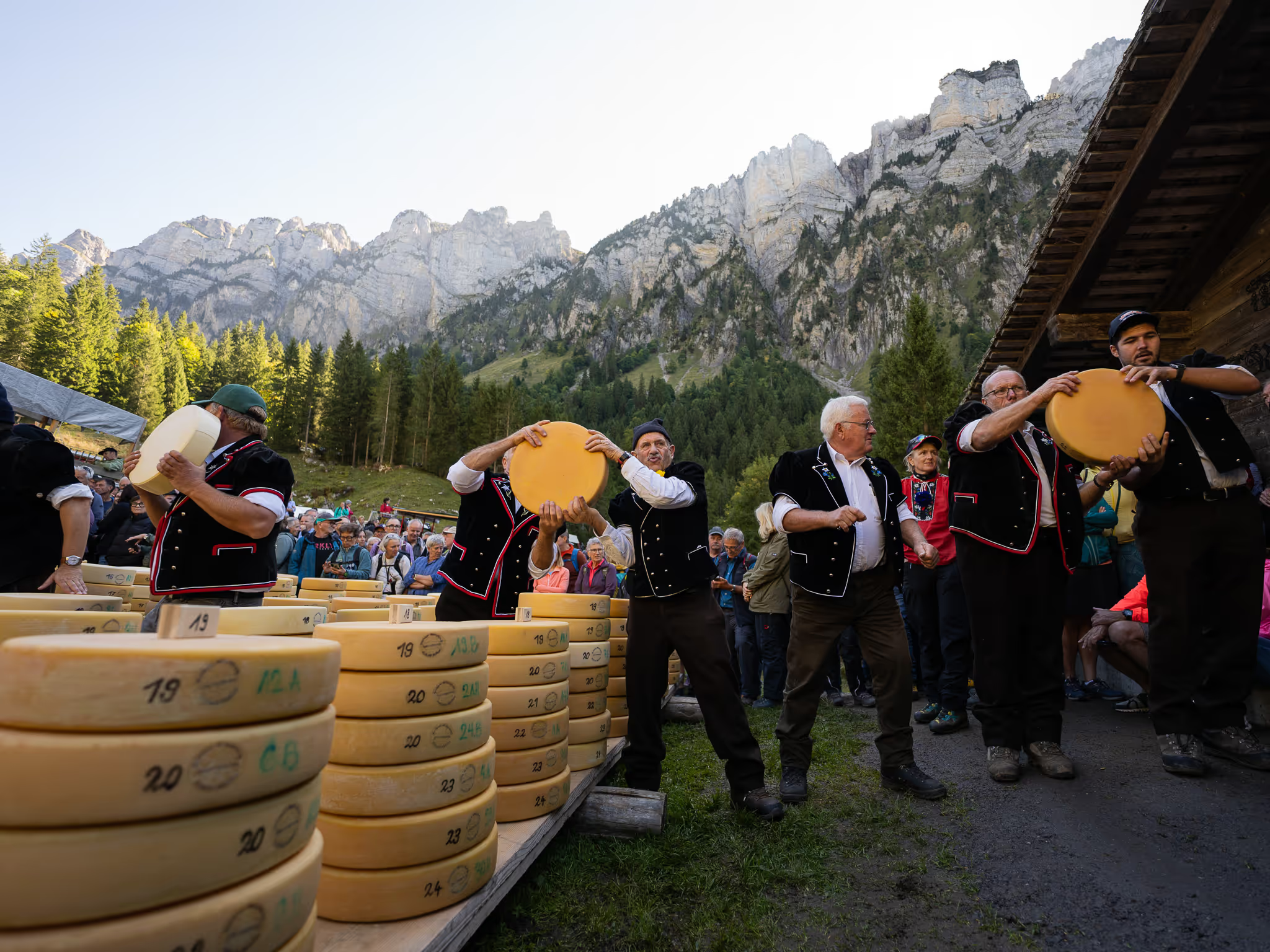
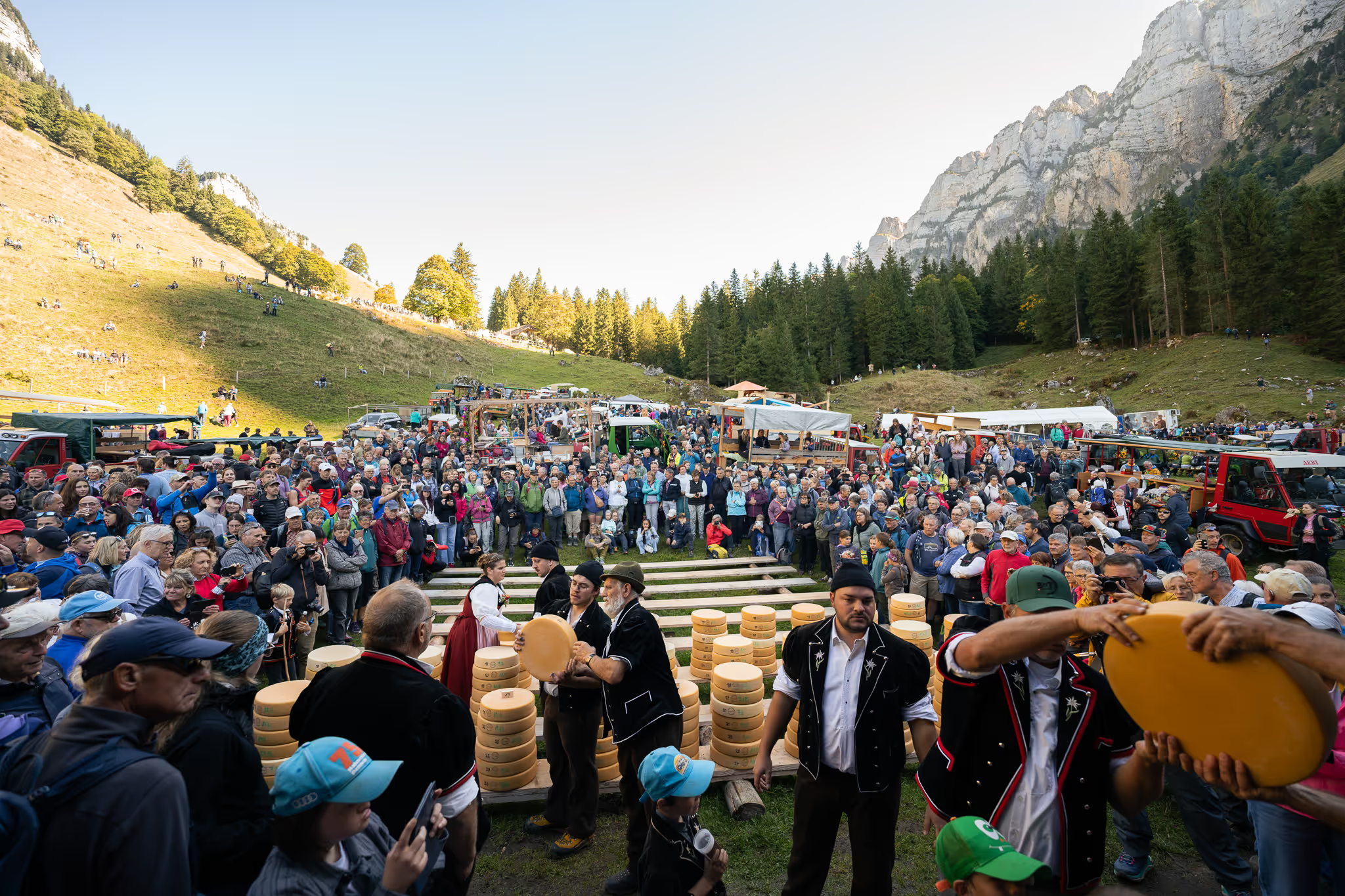
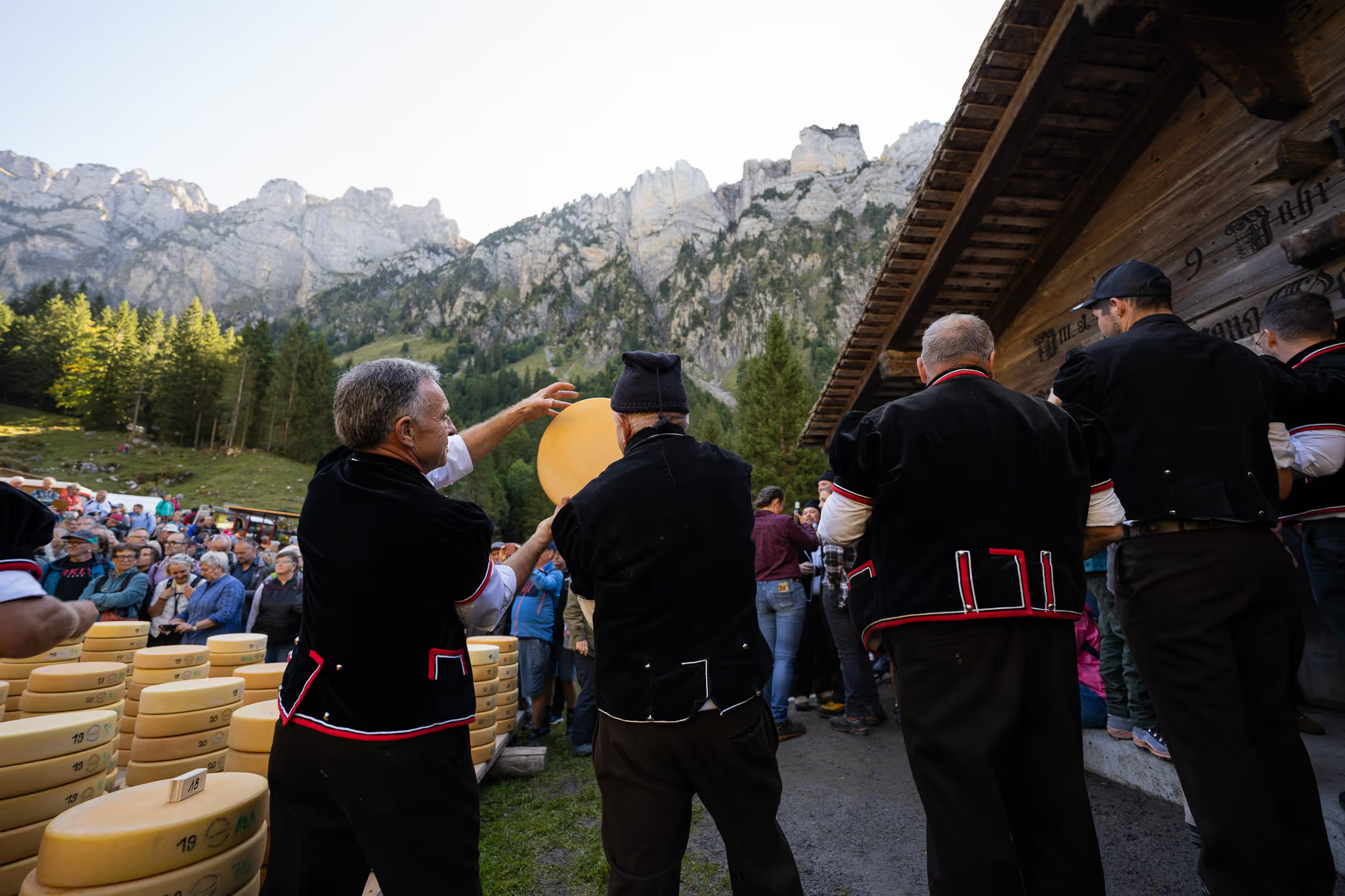
At11 o’clocksharp, the moment has arrived: Amid the cheers of those present, the dairymen and dairywomen open the doors to the cool storage rooms. Now it’s time for “d’Chäslaibe usegäh”—the heavy cheese wheels are taken out, one by one. Passed from one strong hand to the next, the golden-yellow cheese wheels make their way from person to person. It’s teamwork, like an assembly line in silence. Piece by piece, carefully layered stacks take shape on the wooden slats, each one a separate lot. This year, 94 lots are gathered at the large Mittelberg—an impressive sight as over600 wheelsof alpine cheese are carefully stacked in front of the rustic granary.
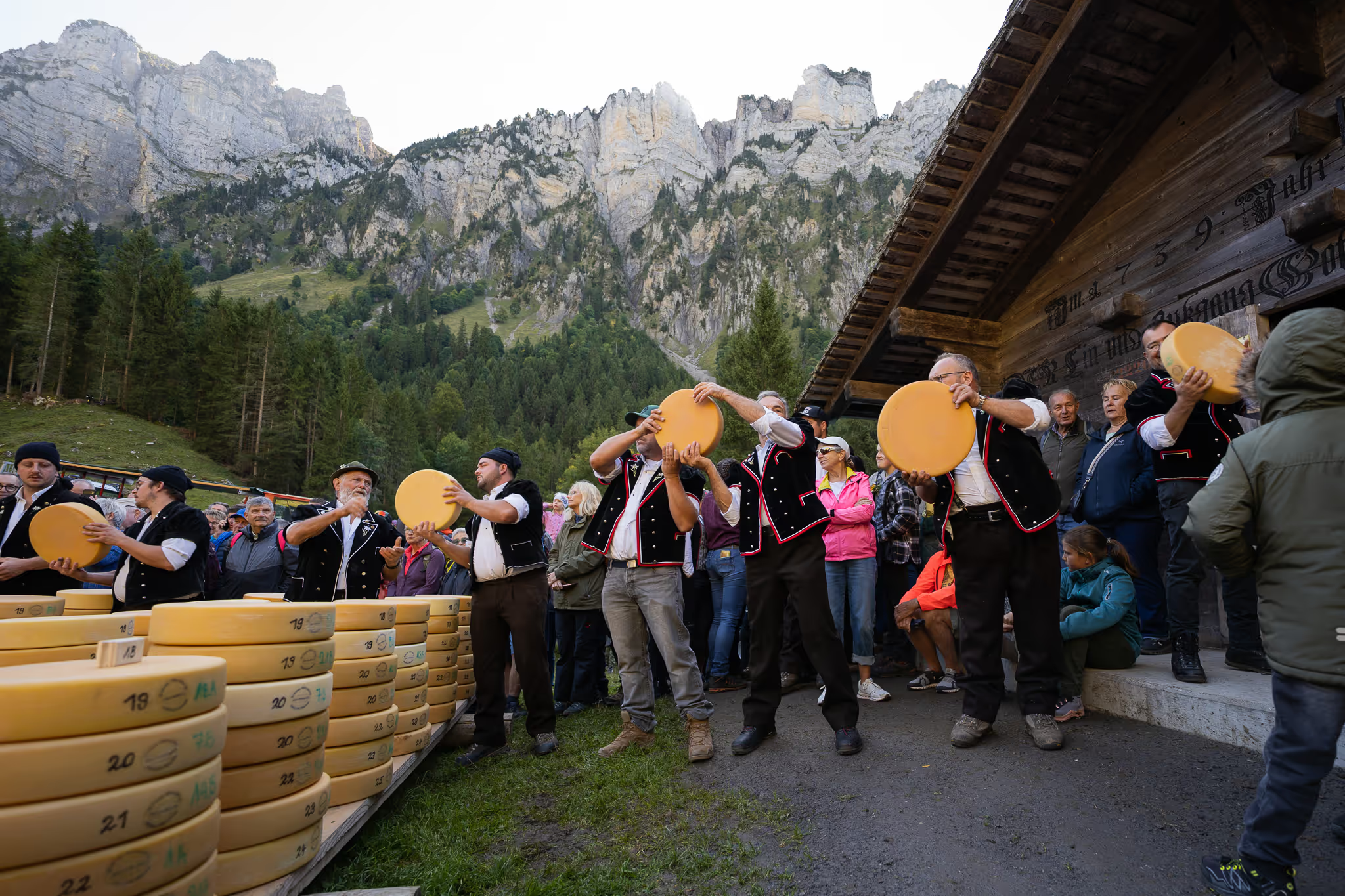
But what exactly is a“Los”? Daniel Eschmann gave us a brief introduction to this. He explained that each ofthe 255 cowsin the Justistal valley was milked throughout the summer and that the amount of milk produced is precisely documented. Four “Säume” make up one “Los”; one “Saum” is 200 liters of milk. One lot corresponds to about800 liters of milkand yields approximately70–75 kg of alpine cheese. In other words, depending on the mountain and the year, one lot comprises a varying number of pounds of cheese. This year, it amounted to about148 pounds of cheesefrom the large Mittelberg. (1 pound = 0.5 kg), which is pretty much exactly what each stack weighs. It’s astonishing how precisely the alpine herders maintain these weights: the lots differ by no more than 1 pound, so each stack weighs between about 147 and 149 pounds. This feat is achieved by cleverly mixing the cheese wheels: older wheels from June, which have been aged a bit longer, are combined with younger wheels from late summer until each stack reaches the target weight in total. This way, everyone gets their fair share of the total yield from the alpine summer.
By the way, when it comes to dividing up the cheese, not a single wheel is cut in half—that’s an unwritten rule that’s always been in place. Although the milk yield from each cow never adds up to the exact number of pounds of cheese, no wheels are cut in half. Instead, after the division, the amounts arebalanced out among the members: If someone has received “too much” cheese, they sell the excess wheels to someone who is a few pounds short, or buy additional cheese from others as needed. This way, all the cheese wheels remain whole and the traditional rule is upheld.
Alpine Cheese vs. Mountain Cheese – What's the Difference?
With so much cheese around, the question arises:What exactly is the difference between alpine cheese and mountain cheese?The terms are often confused, but there is a clear difference:
- Alpine cheese:This cheese is madeonly in the summer, directly on the alp, using raw milk, during the time when the cows spend the summer on the alpine pastures and graze on fresh grass. Every Alpine cheese is therefore a seasonal product of the alpine summer.
- Mountain cheese:Although this cheese also comes from mountain regions, it is producedyear-round in village cheese dairiesor commercial dairies. This means that even in winter, when the animals are kept in barns in the valley and fed hay, mountain cheese is produced in the valley dairies.
Alpine cheeseenjoys a special reputation among connoisseurs because its flavor carries the notes of aromatic Alpine herbs and summer pastures. Mountain cheese, on the other hand, offers consistent quality year-round from mountain milk, though without the distinctive flavor of the summer pastures. Both types of cheese are delicious, but a genuine Alpine cheese, fresh from the alpine hut, remains a unique treat of the alpine season.
The Cheese Stack Giveaway
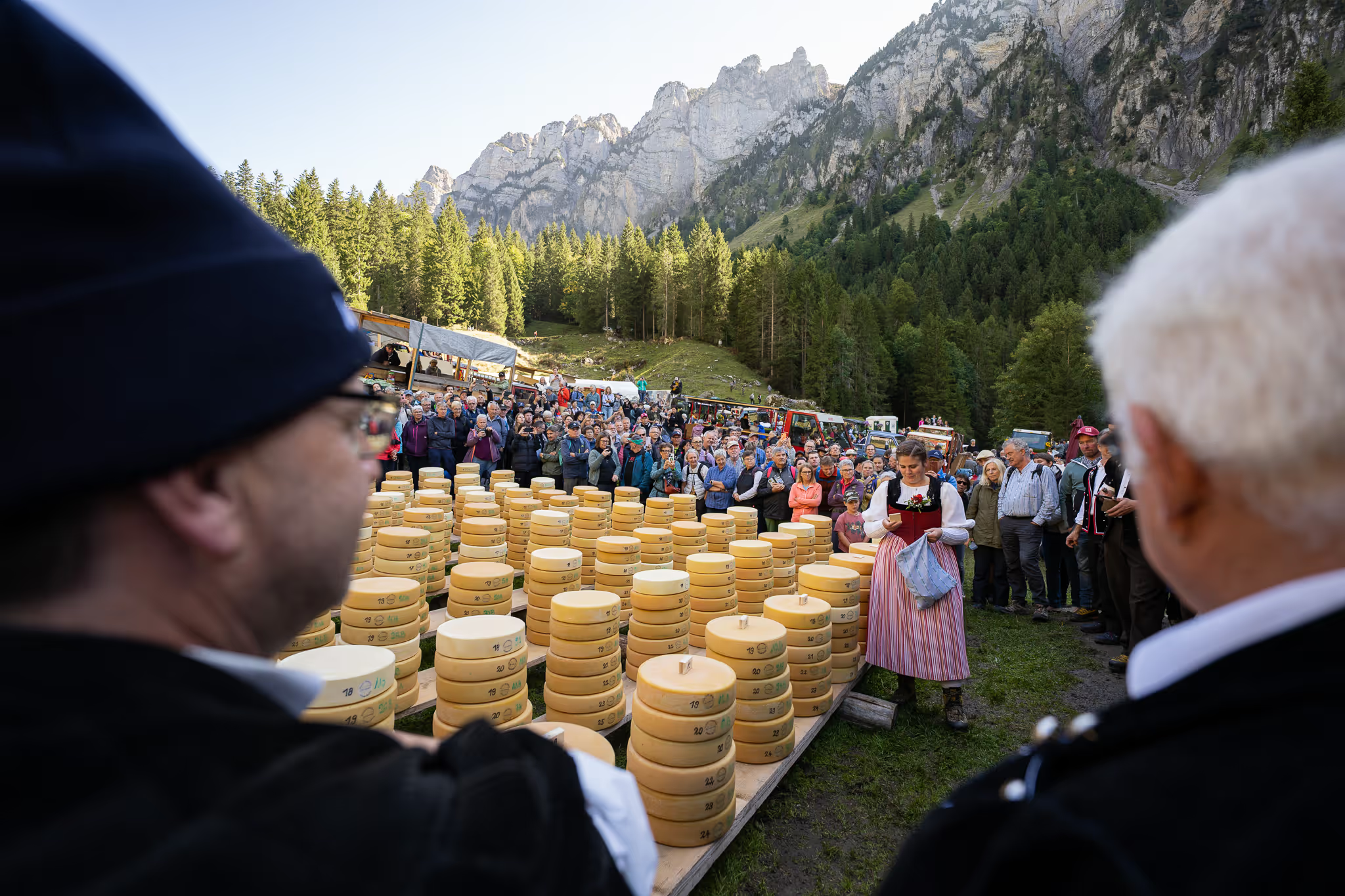
Back at the cheese-cutting area: Once all the wheels have been stacked—a total of nearly7.5 metric tonsof cheese produced this summer on the large Mittelberg alone in the Justistal—the most exciting moment of the day follows. Now it’s time to decidewho gets which stack of cheese.Cheesemaker Flavia Liechtitakes center stage. Flavia is the master alpine cheesemaker at the valley’s largest alp, which has 55 cows and its own cheese cellar. With a steady hand, she holds a small bag containing little wooden tablets, the“Brittleni.” Each one bears a name and the numberof “Säum” that belong to aparticular lot.Sometimes there are several names on one—in that case, the participants must share the cheese without cutting a wheel in half.
Now the audience holds its breath:Flavia picks up one Brittleni after another, walks along the row of cheese stacks, and places a Holtzäfeli on top of each one. In a loud voice, she calls out the names of the people entitled to the respective stack. A murmur and nods of approval ripple through the rows as familiar family names are called out. Many of the farming families present have been here for generations. Little by little, each cheese finds its owner. When thelast Brittleniis distributed and the last name is announced, a wave of applause breaks out. The relief is palpable:the cheese has been divided fairly, and no one goes away empty-handed. On the faces of the herdsmen and mountain rights holders, one can see joy and also a little pride at the successful conclusion of the alpine season.
But there’s no time to rest for long—now the hustle and bustle begins: Helpers are rushing in from all directions to load the heavy loaves onto vehicles. Family members, friends, and acquaintances of the alp owners pitch in, becauseevery helping handis needed. Amid all this hustle and bustle, the spirit of community shines through impressively: Strangers pass loaves to one another across the truck beds, laughing and working together.
Once the last wheel of cheese has been loaded, the helpers take a breather. They pat each other on the back in appreciation. Bystanders strike up conversations with the mountain dwellers. Now that the official part is over, everyone present mingles and shares their impressions. It’s wonderful to see howtradition and the presentcome together here: Alpine herders in traditional dress explain the process to curious hikers, young volunteers post their first photos on social media, and older generations tell stories from past Chästeilet celebrations. Many visitors are moved by the warmth and authenticity of the experience. “You rarely find something this authentic anymore,” says one enthusiastic visitor, and another adds,“I think it’s wonderful that traditions like this are still being preserved today.”These comments from the visitors capture themagic of the Chästeilet: It’s not just about cheese, but about the people and the shared joy of a living tradition.
Alpabzug: The Festive Procession of Cows
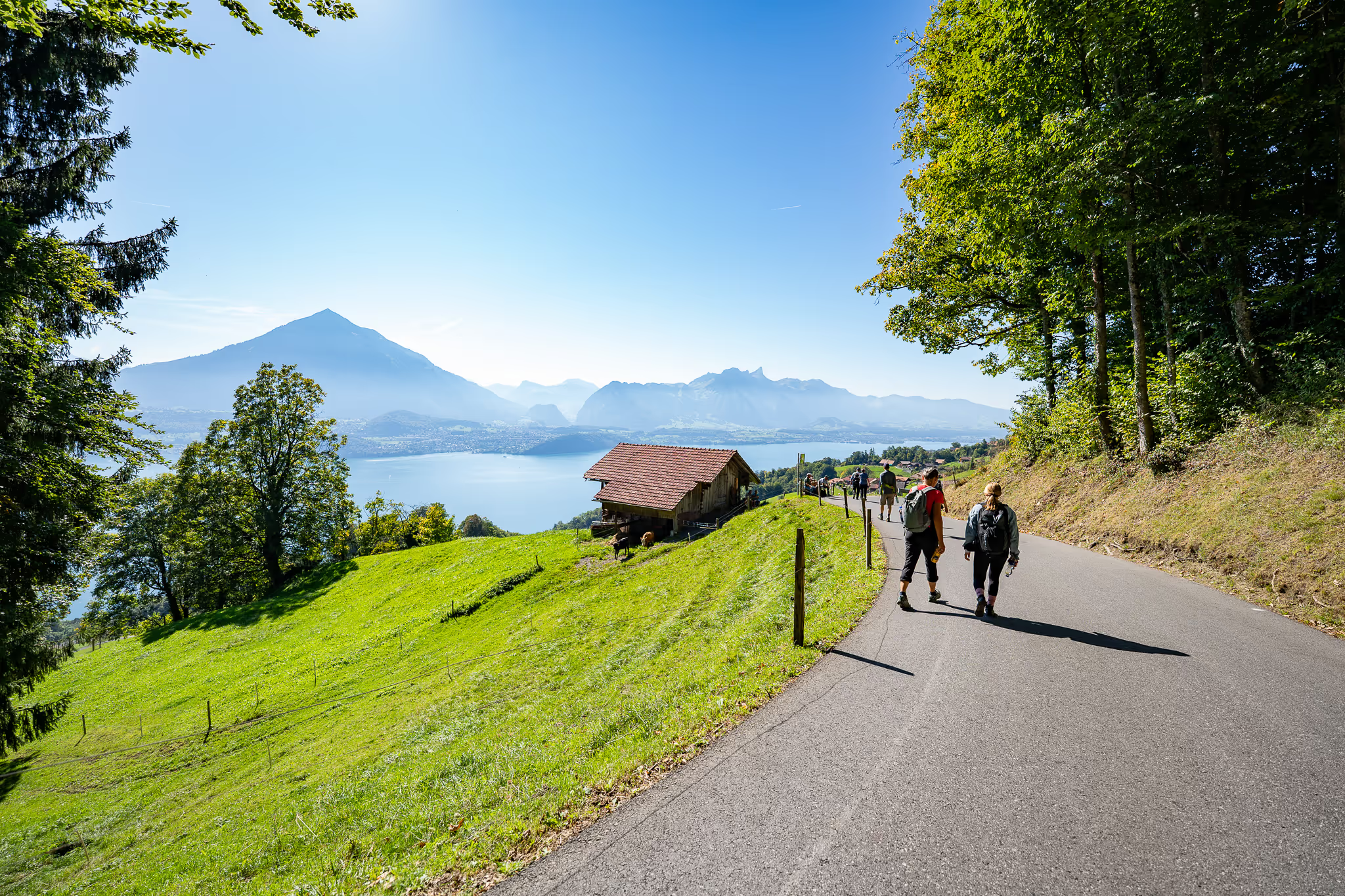
We set off for the village even before the cows did. Along the way, we were repeatedly overtaken by tractors, cars, and small vans, all loaded with people and cheese being taken down to Sigriswil. For us, however, it remained a leisurely walk, with magnificent views of Lake Thun, the Niesen, and the mountain range across the way.
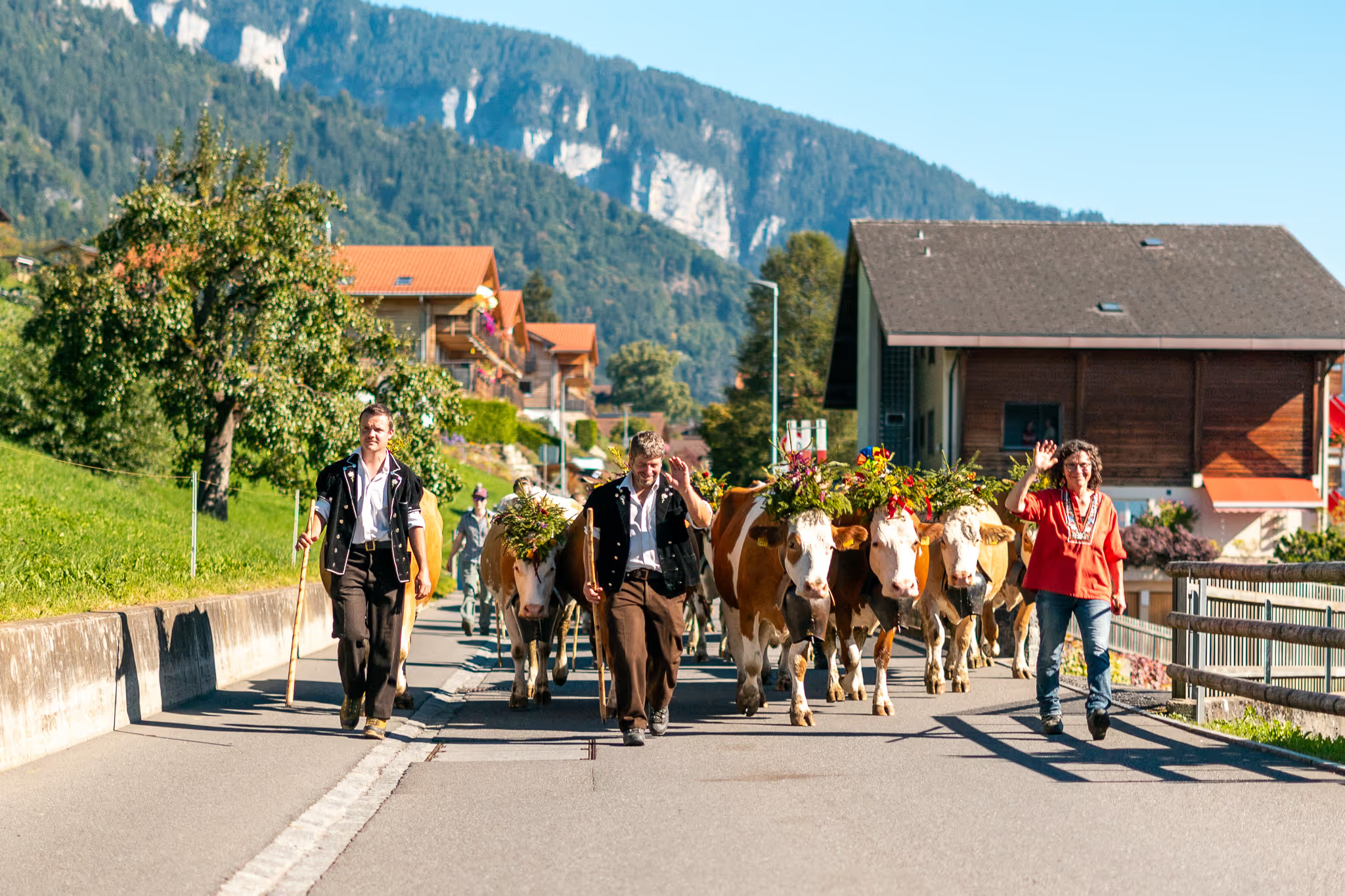
Later, we learned how the actual Alpabzug had gone: Many cows wore floral decorations, known as“Meien,” but by no means all of them. There’s an old rule behind this: Only cows that produced a particularly large amount of milk during the summer receive the honorary wreath. Each alp sets its own standards, which is why some animals return home magnificently adorned, while others are quite plain. This detail shows just how closely tradition and performance are intertwined here.
For us, the trip to Sigriswil was a peaceful way to end the day—a slow, leisurely conclusion, while all around us the big rush to get home was already in full swing.
But the day is far from over.For many, the festivities in Sigriswil are just getting started. I was surprised by how many people were waiting for the cows down in the village—entire families, neighbors, and guests. As I made my way to the bus, I suddenly heard the loud ringing of bells: the first “Alpabzug” had arrived in Sigriswil.
The celebrations continue in homes and gardens. Families prepare soup and coffee, and cakes and bread are set out on the tables. People sit together, reminiscing about the summer, and in the meantime, they carry the heavy loaves down to the cellars. For many, it’s a convivial way to wrap up the season; for some, it’s almost like a second celebration.
Conclusion: An experience for all the senses
My personal takeaway from the Chästeilet 2025:This day in the Justistal Valley has shown me in no uncertain terms that it’s not just about cheese and old rituals, but above all about the people, the community, and the passion with which this custom is brought to life. The Chästeilet in the Justistal is far more than just a spectacle for visitors. It isa living tradition, a genuine cultural treasure, and a celebration of community. From the first alphorn call in the morning to the final encounters in the village, you can feel the connection to nature and the pride in Alpine culture.
If this report has inspired you to take a trip to this mountainous region, I’m truly delighted. I highly recommend experiencing this unique event for yourself after the next Alpine summer. The Chästeilet will take place again in September 2026. Feel free to add it to your plans—you won’t regret it. A day full of tradition, heartwarming encounters, and delightful experiences awaits you.
And since pictures often say more than words, you'll find a gallery at the end featuring all the highlights of this special day.
Gallery: